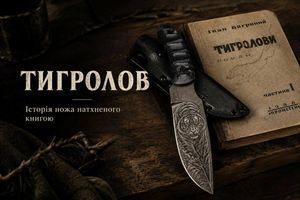

🔪 How to Choose a Tactical Knife: A Guide for Beginners and Professionals
A tactical knife is not just an accessory — it’s a tool that can save your life in a critical moment. You don’t choose it for beauty, but for functionality, reliability, and purpose. In this article, we’ll walk you through how to choose a tactical knife: what to pay attention to, what specs matter, and how to avoid costly mistakes.
🔍 When Do You Need a Tactical Knife?
Before buying, ask yourself a simple question:
Where and why will you use it?
A tactical knife is useful for:
-
military personnel and territorial defense;
-
rescue workers and medics;
-
survival instructors and trainers;
-
outdoor adventurers in extreme conditions;
-
anyone who values steel reliability in tough situations.
1. 🛠 Blade Material: Strength and Durability
The ideal tactical knife has a blade that:
-
holds its edge well;
-
withstands impact and stress;
-
resists rust, moisture, and temperature changes.
Top steel choices:
-
Kh12MF — high-performance tool steel with excellent hardness (e.g., 59 HRC), perfect for combat and field conditions.
-
D2, N690, 440C — popular mid-to-high-end steels used in tactical knives.
📌 Pro Tip: Look beyond just the steel type — blade finishing matters (e.g., non-reflective coating, satin, stonewash, etc.).
2. 📏 Blade Shape: What Are You Cutting?
A tactical knife must be versatile — to cut, pierce, pry.
Popular blade shapes include:
| Blade Type | Features | Best For |
|---|---|---|
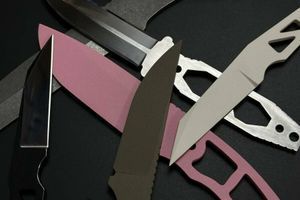
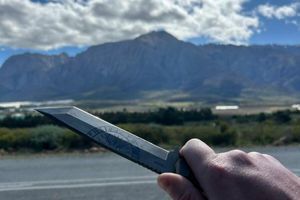
| Tanto | Reinforced tip with angled edge | Piercing, combat |
| Drop Point | Smooth curve to tip | General use, slicing |
| Dagger | Symmetrical double edge | Stabbing, penetration |
| Clip Point | Sharpened concave tip | Precision cutting |
📌 Pro Tip: If unsure, go with Drop Point or Tanto — both work well for combat and field tasks.
3. 💪 Construction: One Piece = Maximum Strength
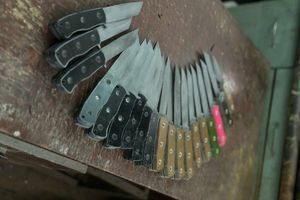
Full Tang means the blade runs through the entire handle — making it strong enough for batoning, chopping, and pressure tasks.
🔩 Avoid knives with blades glued or inserted into the handle — that weak point can fail under stress.
4. 🧷 Handle: Grip and Safety
A good tactical handle should:
-
provide a non-slip grip (even when wet or gloved);
-
be ergonomic, not cause blisters;
-
include a finger guard or grooves.
Best handle materials:
-
Micarta — durable, water- and heat-resistant;
-
G10 — reinforced composite with excellent grip;
-
Rubber / TPE — common in budget knives, but less durable.
5. 🔒 Sheath & Mounting: Secure = Safe
A reliable knife comes with:
-
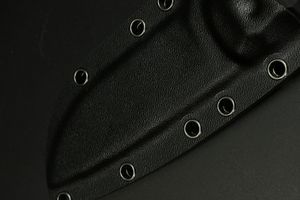
Rigid sheath (Kydex, plastic, or thick leather);
-
Secure blade retention — won’t fall out while running or crawling;
-
MOLLE / Tek-Lok compatibility — for vests, belts, or packs.
📌 Pro Tip: Test one-hand deployment. If you can’t draw it fast — it might not save you in time.
6. ⚙️ Extra Features (Optional, But Handy)
-
Serrated edge — useful for cutting rope, fabric, straps;
-
Glass breaker — helpful in rescue operations;
-
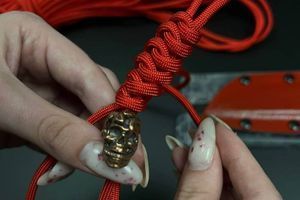
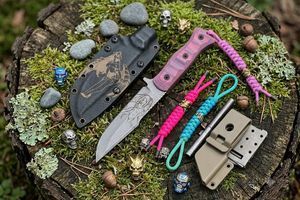
Paracord holes — for attaching or improvising tools;
-
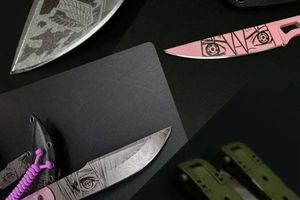
Custom engraving — for personalization or gifting.
🧪 Pre-Purchase Checklist
✅ Make sure the knife doesn’t qualify as a prohibited weapon (single-edge, no guard).
✅ Check the grip — it should feel right in your hand.
✅ Verify steel quality and manufacturing integrity.
✅ Choose a knife made for real use, not just display.
🛡 Recommendation: "Yarchuk" Knife by ProstaSTAL
-
Steel: Kh12MF, hardness 59 HRC
-
Full tang construction
-
Micarta handle
-
Custom engraving + MOLLE sheath
-
Tested and approved by Ukrainian soldiers at the frontline
📌 Looking for a knife for fieldwork, service, or as a gift for a soldier? This one checks every box.


✅ Final Thoughts
A tactical knife is a serious responsibility.
You don’t buy it to put on a shelf.
You choose it as a trusted tool — one that won’t fail you when you have nothing but yourself and steel.
🔪 Choose with your heart. But test with your head.
And may your knife never be your last chance — but always be by your side.