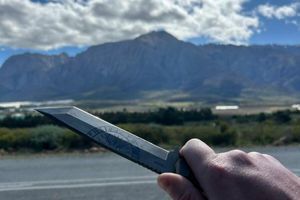
Knife Sharpness: The Myth of "Eternal Razor Edge" and D2 (X12MF) Steel Realities
Every ProstaStal knife owner does the same thing upon unboxing: they check the sharpness on paper or shave the hair on their forearm. We take pride in our factory sharpening, but we often get asked: "Why did my knife stop cutting paper after the first trip outdoors?"
Let's explore where the "razor magic" ends and the real work of the tool begins.
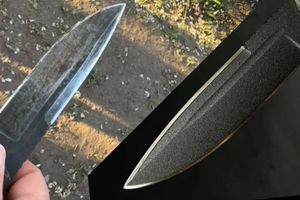
When a knife leaves the workshop, it has an ultra-thin cutting edge. This is the state of maximum steel aggression. However, it's important to understand the physics of the process:
Razor Sharpness
This is a micron-level layer of metal that allows the knife to "fall" through paper. It is the most fragile state. At the first contact with a hard surface (bone, sand on food, ceramic plates), this micro-layer rolls or wears down.Working Sharpness
This is the state where the knife no longer perfectly shreds paper in the air but continues to confidently cut wood, ropes, meat, and vegetables for weeks. For a professional tool, this is the main and longest life cycle between maintenance sessions.Even the best D2 (X12MF) steel tempered to 58–60 HRC can seem "soft" if the rules of operation are violated:
- Abrasives Around Us: Invisible dust or sand on vegetables or wood works like sandpaper. A single cut through a dirty bag can damage the micro-edge.
- Treacherous Surfaces: Cutting on glass boards, ceramic plates, or metal countertops is the fastest way to "kill" an edge within 10 minutes. Use only wood or plastic.
- Blade Hygiene: D2 is a semi-stainless tool steel. Salt or acid residues from food on the edge can cause micro-corrosion of the apex itself. The rule is simple: cut — and wipe dry.
3. How to Restore the "Razor Edge" in 30 Seconds?
We believe a knife owner shouldn't have to be a professional sharpener to maintain their tool. For our steel, we recommend a ruby honing rod. This is a ceramic rod that doesn't remove much metal (unlike standard sharpeners) but simply realigns the cutting edge (micro-bevel).
- 5-6 light strokes on each side at the correct angle.
- The knife becomes "aggressive" again and ready to cut paper.
- This is a mandatory attribute for those working in the field or on the front lines.
Video Guide: Musat, what is it and how to use?
We stand by our heat treatment. If you have doubts about the metal quality, we are ready to accept the knife for diagnostics at the ProstaStal workshop. Here is how the check works:
- We measure the steel hardness using a professional stationary Rockwell tester.
- We check the sharpening angle and bevel geometry.
Note: For accurate hardness testing, we must locally remove the protective coating (etching/polymer) on a small area. If the test confirms the specified characteristics (58-60 HRC), restoration and logistics are paid by the client. If we find a defect, we fix everything at our expense.
We believe in our craftsmanship, so we always work with our customers. If your knife has lost its edge, you have two options:
- We will perform a full regrind of the blade for free.
- Correction of all identified defects at our expense.
- Send the knife to us for resharpening: Our masters will restore the "razor" state using professional equipment and precise angles.
- Cost: In these cases, the sharpening service and shipping are paid by the client, but you get a guaranteed factory-quality result.
ProstaStal Advice: Before sending it in, try using our ruby honing rod. In 90% of cases, 30 seconds of honing is enough to get the knife back to cutting paper.
Simply message us or call. We will consult you on whether it's worth sending the knife for a full resharpening or if a quick DIY edge touch-up is enough.