
Imagine an evening in the woods, as the frost begins to nip at your fingers and the sky fills with heavy clouds. In your pack, you have only the essentials; on your belt sits a survival knife that must become your primary tool until dawn. When a single blade is responsible for both your dinner and the warmth of your fire, design ceases to be a matter of aesthetics—it becomes a matter of efficiency. The Drop-point blade shape has earned its reputation as the most balanced solution for field conditions not through fashion, but through mechanical logic.
The Essence of Design: The Line of Force
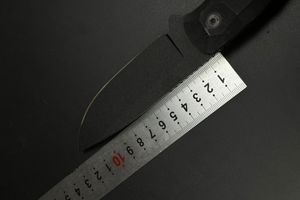
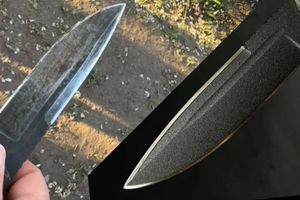
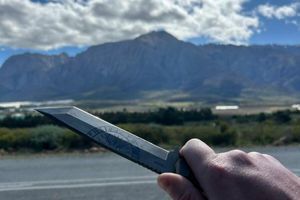
The defining feature of a Drop-point is how the spine line gradually lowers (or "drops") toward the tip. This is more than a visual choice. This geometry brings the tip closer to the central axis of force applied during a piercing or drilling motion.
As a result, you gain:
-
Enhanced Control: You can clearly feel exactly where the knife’s tip is located, even when working in low-visibility conditions or performing delicate tasks inside a carcass.
-
Tip Strength: Unlike blades with a sharp upward curve (like a clip-point), a bushcrafting knife with this shape maintains significant steel thickness almost to the very end. This allows the tool to handle heavy work—such as prying wood or boring holes—without the fear of snapping the tip.
Working with Meat: Safety and the "Belly"
For those choosing a hunting knife, the Drop-point profile is a priority for one key reason: the safety of the game's internal organs. Since the tip is lowered, it is less prone to accidental punctures of the abdominal cavity during skinning.
The long, smooth curve of the cutting edge (known as the "belly" of the knife) ensures an efficient slice. You utilize the full length of the blade, which is vital when processing large cuts of meat. This makes a knife for bushcrafting a fully functional workhorse, equally capable of fine trimming and forceful joint separation.
Forest Work: From Stakes to Drilling
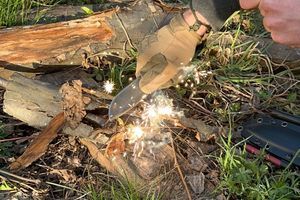
During rucks and camping trips, the versatility of the Drop-point is revealed through its symmetry. Because the tip is positioned near the center, it is remarkably easy to use this hiking knife to drill holes in wood (for example, when making a fire bow or shelter lashings).
The sufficiently wide spine allows you to apply confident pressure with your second hand during high-force operations. Meanwhile, the grind geometry maintains an optimal balance between edge durability and the ability to bite deep into timber.


Why Is This a Rational Choice?
Many search for the "perfect tool," forgetting that in the forest or on a hunt, over-specialization can become a burden. By deciding to buy a bushcraft knife with a Drop-point shape, you receive a compromise that doesn't sacrifice any critical function:
-
It is not so sharp at the end that it becomes brittle.
-
It is not so curved that it loses its piercing capability.
-
It has enough "meat" on the spine to withstand heavy loads.
A high-quality bushcraft knife is, above all, about predictability under pressure.
Conclusion
Drop-point geometry is the embodiment of the "necessary and sufficient" principle. It is the shape for those who value the reliability of their tool. When you decide to buy a knife, you are investing in time-tested blade mechanics that simply get the job done.