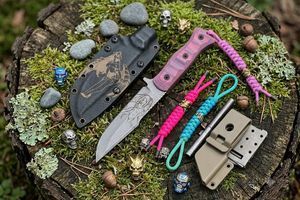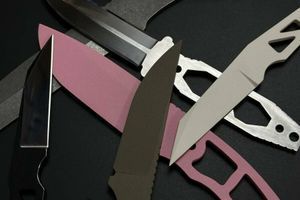

Anatomy of a Tactical Knife. Part 1: Blade, Geometry, and Myths
Many believe that the aggressive look of a tactical knife is just a marketing ploy to grab attention. "Blood grooves," serrations, or massive guards are often perceived as decorative elements. However, in the world of professional gear, every line has a strict functional purpose.
You are holding your knife. At first glance, it seems simple: a handle and a blade. But if you look closer, you will see a multitude of small details: holes, notches on the spine, beveled edges. Engineers don't do anything "just for beauty." Every curve has its tactical task.
In this series of articles, we will debunk the most popular myths about tactical knife elements and reveal construction secrets usually known only to pros. Let's start with the most important part — the Blade.
1. "Full-Tang" Construction: One Strip of Steel
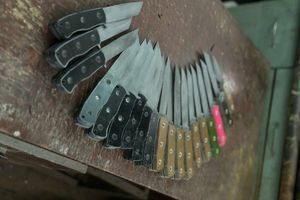
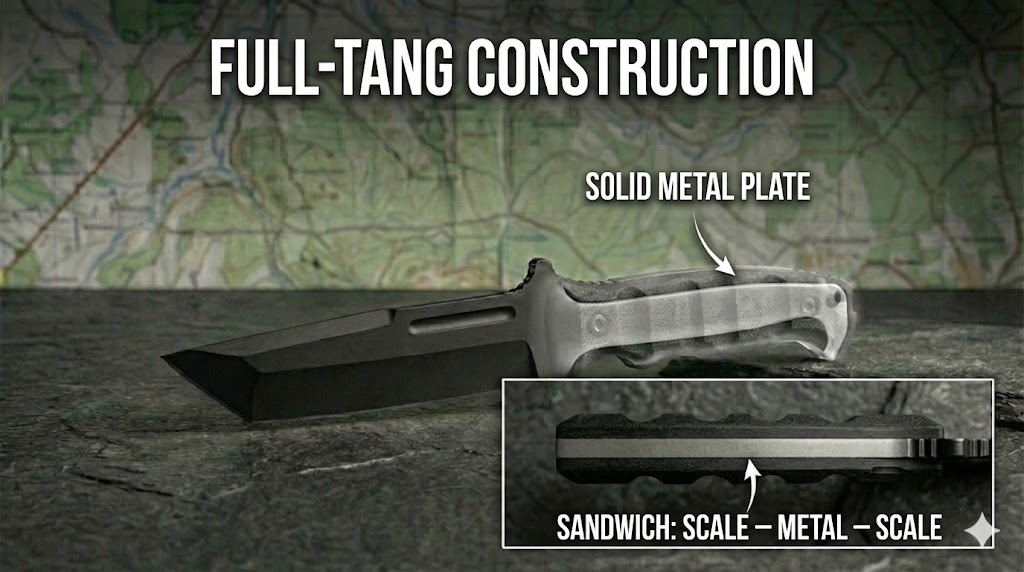
If you see that the metal part of the knife runs through the entire handle and is visible from the sides — you are looking at a Full-Tang construction. This is the "gold standard" of reliability.
- Maximum Strength: It is practically impossible to break such a knife in half at the junction of the handle and blade. Even if the handle scales burn in a fire or shatter from an impact, you can wrap the bare metal with a piece of cloth or paracord and continue working.
- Balance and Weight: Full-tangs are usually heavier than hidden-tang knives, which is a plus for rough work. This weight helps when chopping — for example, when you need to split a log or use the knife as a mini-crowbar to pry something heavy.
2. Blade Coating: Why is it Black or Matte?
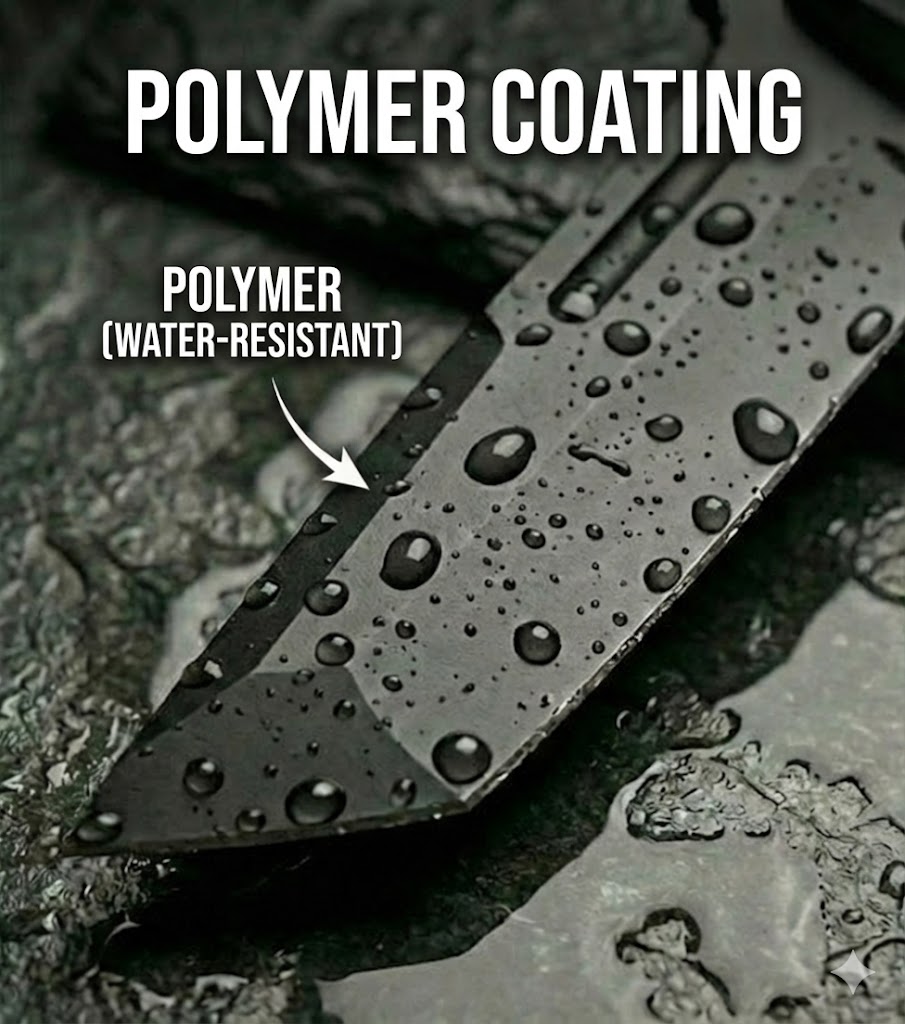
A shiny knife looks good in a display case, but for real tactical tasks, it's a downside. Most professional knives have a special coating (Stonewash, bluing, polymer coating). This is not just for style.
- Anti-glare (Camouflage): A knife should not give away the owner with sun glint. This is critically relevant for military personnel, hunters, and special forces, where stealth is the key to success.
- Corrosion Protection: Tactical knives are often made of high-carbon steel, which cuts aggressively but is prone to rust. The coating creates a reliable barrier against moisture, blood, salt, and dirt. But remember: a knife needs care, so always remove moisture from the cutting edge after use.
Important Rule: Remember, this is not magic. The cutting edge (the very part that cuts) remains uncoated, so the "golden rule" still applies: the knife must be returned to the sheath only when dry.
3. Stonewash: The Aesthetics of Beaten Stone
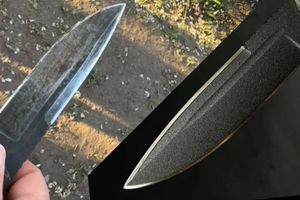
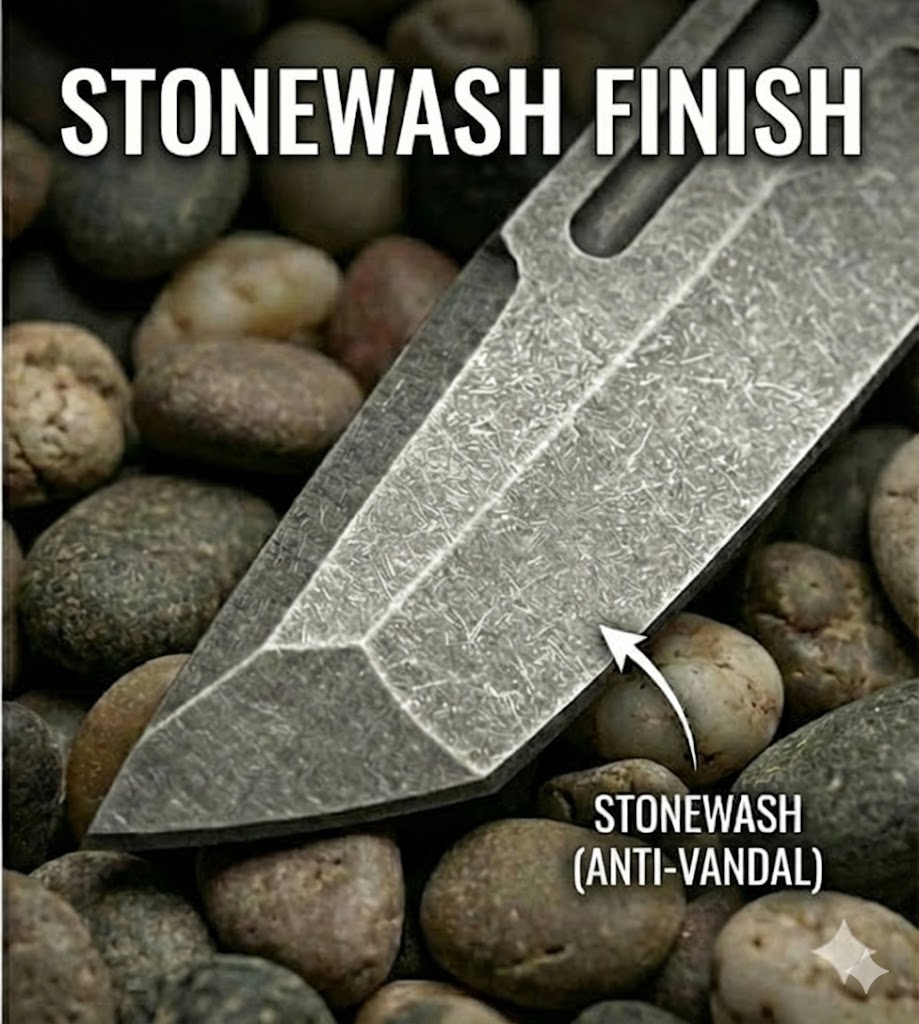
Have you seen knives that look like they were rubbed against asphalt? This is Stonewash processing — an "anti-vandal" blade finish. It is created by tumbling: blades are rotated for hours in a drum with ceramic stones.
- Main Feature: This finish perfectly masks signs of wear. On a mirror-polished knife, the first scratch ruins the look. On stonewash, new scratches, scuffs, and fingerprints simply get lost among thousands of others. Such a knife looks just as brutal after years of hard use as it did on the day of purchase.
4. Blade Grinds: Secret Geometry
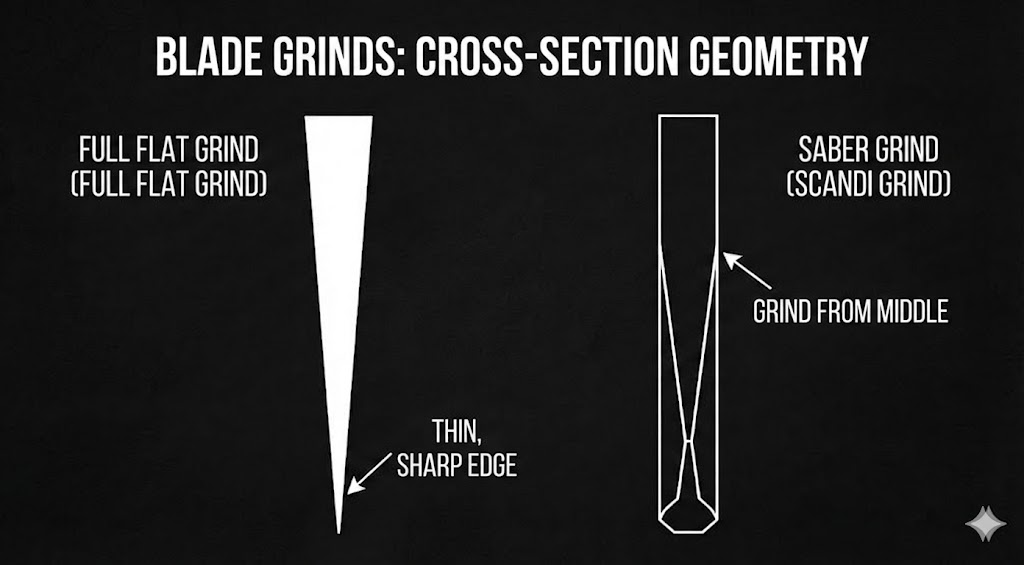
How exactly the blade tapers from the spine to the cutting edge defines the character and purpose of the knife. This is the knife's "DNA".
Full Flat Grind — "The Razor Effect"
- How it works: The blade tapers smoothly from the very top (spine) to the bottom. The knife meets no resistance and softly "sinks" into the material.
- Purpose: Ideal, deep cut. Best suited for slicing food, meat, working with fabric, and precision tasks.
- Downside: A more delicate tip that is afraid of strong lateral loads (you shouldn't pry too hard).
Saber Grind / Scandi — "The Splitter Effect"
- How it works: The grind starts from the middle of the blade, leaving a thick rib of stiffness. The knife works like a wedge: first it cuts, then it splits the material.
- Purpose: Heavy-duty work. Chopping branches, planing wood, opening crates, piercing sheet metal.
- Plus: Incredible strength. Works like a sharpened crowbar.
5. American Tanto: Hello from the Samurai
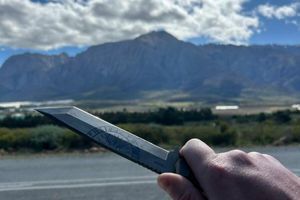
Many tactical knives have a chopped, aggressive blade shape. Interesting fact: Original Japanese tantos had a smooth curve. The "chopped" geometric shape we see today is a purely American modernization from the 80s.
- Why it's needed: This geometry makes the knife tip extremely strong. At the point where the cutting edge breaks angle, a rib of stiffness is formed ("chisel effect").
- Piercing Capability: A Tanto tip has much more steel mass behind the point than a classic knife. You can pierce metal sheets, car hoods, doors, or dense plastic without fear of snapping the tip.
6. Tip Geometry: Tanto vs Drop-point (Classic)
The classic Drop-point shape (blade with a gentle slope of the spine) is the most versatile option for a tactical knife.
- Why it's important: This shape aligns the point closer to the central axis of the knife. This allows applying maximum force when stabbing (piercing) without fear that the tip will veer off or break.
- Function: This is the perfect balance between the knife's ability to slice (thanks to the long "belly" of the blade) and the ability to pierce effectively. More here
7. The "Blood Groove" — The Main Myth of the Knife Industry
What people commonly call a "blood groove" is professionally called a Fuller (a longitudinal groove on the blade flat). It performs no mystical "blood-letting" function.
- Weight Reduction: The fuller allows significantly reducing the weight of a massive blade without losing its strength. This is critical for long knives and machetes.
- Stiffness: It works on the principle of a construction I-beam — a blade with a fuller becomes more resistant to transverse bending.
8. "Tactical" Does Not Mean "Weapon"
Many are afraid to buy powerful knives, thinking they are "Cold Weapons" (illegal) and they might get in trouble. Let's debunk this fear.
- Reality: Ukrainian legislation is very loyal to knife owners.
- Utility Tool: Most tactical knives are certified as "general utility" or "household tools". This means that legally, they are no different from your kitchen knife.
- Criteria: If a knife lacks a pronounced guard (finger stop), or if the blade thickness/tip angle meets certain standards, it is a completely legal tool that can be safely carried in a backpack or on a belt.
This is not all!
We've sorted out the metal, but a knife is also about the handle, sheath, and proper carry.
Read in Part 2: Why the handle should be rough, why there are notches on the spine, and how to carry a knife so it doesn't fall out.