🔪 Honing Steel: What Is It For, How to Use It, and Can It Replace True Sharpening?
Many knife owners believe that a honing steel is meant for actual sharpening. In reality, this stands as one of the most widespread misconceptions.
A honing steel does not sharpen a knife in the traditional sense; instead, it helps maintain the sharpness of the cutting edge between full primary sharpening sessions.
In this article, we will break down what a honing steel is, how to use it correctly, and who will find it beneficial.
⚙️ What is a Honing Steel?
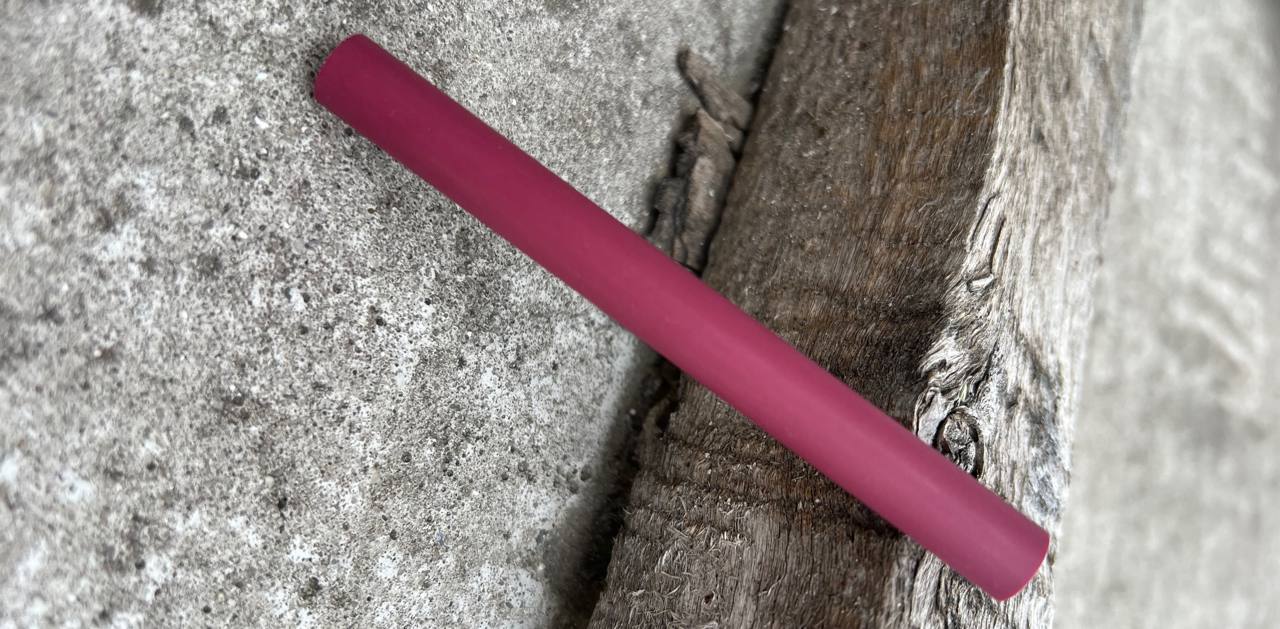
A honing steel (or musat) is a rod tool configured with a solid handle, engineered explicitly to realign and true a knife's cutting edge.
It can be manufactured as:
• a ribbed steel rod;
• a ceramic rod;
• an abrasive diamond-coated rod.
Each type carries its specific mission profile, but all variations serve to preserve a knife blade in immediate operating readiness.
🔍 How Does Honing Differ From True Sharpening?
During cutting cycles, the apex of a knife edge undergoes gradual structural deformation. It does not always turn dull exclusively due to physical steel erosion — often, the ultra-thin micro-apex simply rolls or rolls slightly to one side.
This is precisely where the honing steel comes to assistance.
It flattens and realigns the rolled edge, returning it back to its correct axial geometry.
However, if a blade is already genuinely worn down and blunt, a honing steel cannot rebuild the cutting apex — a complete primary sharpening session will be required.
🛠 How to Correctly Execute Honing Operations?
To ensure edge maintenance is productive, it is essential to trace a few straightforward operating guidelines.
Position the honing rod vertically secure or steady it at a comfortable working angle.
Align the blade bevel flat against the rod surface at the precise factory angle under which it was originally ground.
Using light, smooth, and fluent sweeping paths, draw the blade along the rod from the heel clear to the point.
Mirror this exact procedure alternating smoothly for both bevel fields of the cutting edge.
Typically, 5–10 gentle strokes per side are entirely sufficient.
It is paramount not to crush the edge down — applying heavy pressure can heavily degrade the existing condition of the cutting apex.
📺 Video Tutorial: How to Properly Hone Your Custom Knife
📐 What Angle Must Be Kept?
The most absolute prerequisite is trying to mirror the factory sharpening angle.
For example, at ProstaSTAL, our custom tools forged from X12MF tool steel are shipped out with an inclusive edge angle of 42° (which breaks down to 21° per side).
It is precisely this angle parameter that should be targeted during routine alignment intervals on a rod.
🔪 Is a Honing Steel Suitable for X12MF High-Hardness Steel?
Yes, but it carries a few structural stipulations.
X12MF steel exhibits immense mechanical hardness and retains an edge over extensive deployment timelines.
If you utilize a fine ceramic rod, you can carefully refresh the micro-apex between prolonged heavy tasks.
Conversely, a standard classic ribbed metal steel rod — which is widely implemented on soft kitchen cutlery lines — will prove highly ineffective against the hardness profile of X12MF.
⚠️ When Will a Honing Steel Fail to Help?
If the physical cutting apex has accumulated:
• structural chips or micro-notches;
• severe degradation and blunt wear;
• physical rollover damage;
• distorted secondary bevel geometry,
then a honing steel cannot recover the edge structure.
Under these scenarios, a full sharpening overhaul using dedicated abrasive stones is necessary.
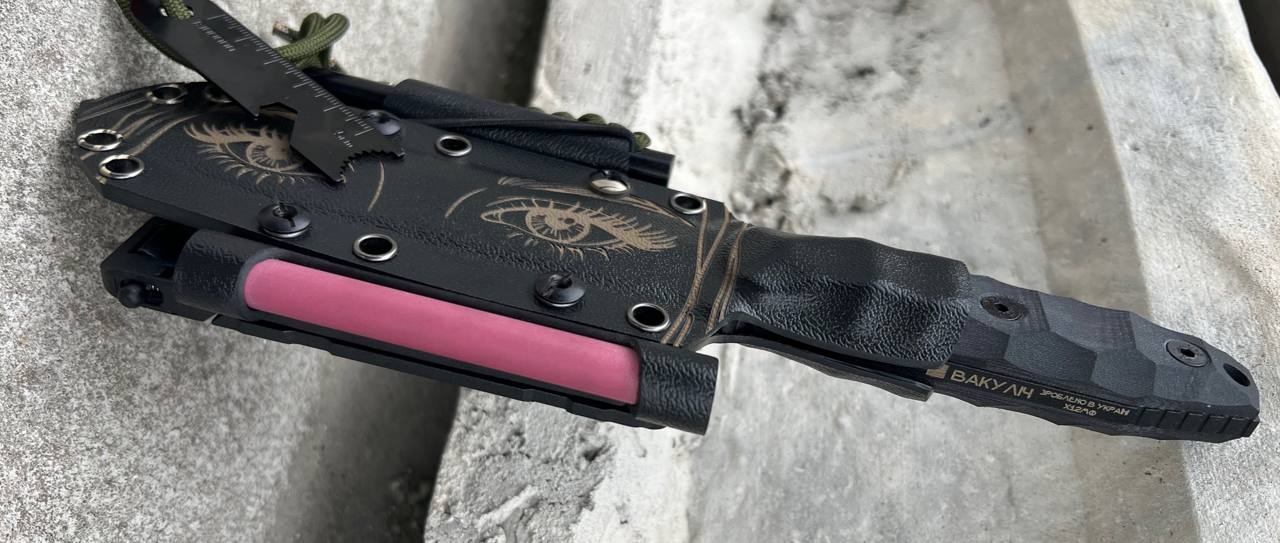
🛠 Professional Edge Maintenance Protocols at ProstaSTAL
To execute true knife sharpening, we employ a progressive series of six Elbor (cBN) stones of varying grit densities, allowing us to accurately map out secondary bevel planes and deliver completely uniform performance results.
We advocate deploying a honing steel solely for temporary tune-up maintenance loops in between full sharpening intervals.
Whenever a blade demands a total structural rejuvenation of its cutting capability, relying on a professional sharpening procedure is the safest path.
If you prefer not to compromise the geometric accuracy of your custom blade, or lack the specialized hardware background required, you can ship your tool directly back to ProstaSTAL. We will factory-sharpen it, preserving the ideal targeting angles, and return a blistering laser edge to your tool.
🧠 In Summary
A honing steel serves as an exceptional secondary accessory for maintaining an edge, but it never stands as an alternative to true primary sharpening.
Consistent, careful truing keeps the apex aligned for extended timelines, whereas timely, professional sharpening loops extend the absolute service life of the tool steel.
Unifying attentive tool habits, sensible rod upkeep, and high-precision abrasive sharpening will guarantee your blade remains a sharp, trustworthy companion through years of rigorous field output.
Require Professional Artisan Assistance?
Connect with the ProstaSTAL workshop — we will consult you on choosing the proper care stones, help recover a razor-sharp apex on your existing tools, or book your build for a complete factory-grade overhaul.
📲 Contact the Craftsman