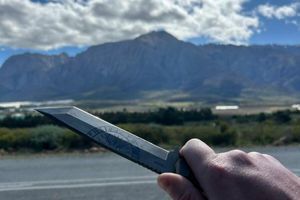

When the familiar world suddenly fades and cozy streets turn into a labyrinth of the unknown, the only anchor you have left is confidence in your gear. You feel the backpack straps digging into your shoulders, and the evening chill forces you to look for your first source of heat. The concept of a "72-hour bag" (or Bug-Out Bag) isn't just a hobby for adventure seekers; it’s a global standard for civilian safety. Why exactly 72 hours? Because that is the critical window during which emergency services organize logistics, or you manage to find shelter in a world that has temporarily lost its balance. Even for a city dweller whose survival is usually limited to a credit card and a smartphone, priorities shift drastically in such moments: basic needs—the warmth of a fire, a sip of water, and a roof over your head—take center stage.
The primary tool that supports your autonomy during these three days is invariably a survival knife. This isn't a "zombie apocalypse accessory"—it is the functional heart of your equipment. The realization of its importance comes when standard urban logic stops working. When you realize that your ability to stay warm or fix what is broken depends on a working blade, choosing a reliable bushcraft knife becomes an engineering calculation for your safety.
Here are five critical tasks that fall on the shoulders of your blade when you can only rely on your own two hands.
1. Starting a Fire: From Batoning to Kindling
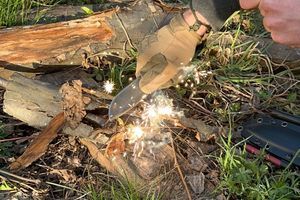
In a 72-hour scenario, fire means warmth, dry clothes, and hot water. If everything around you is soaked, your bushcraft knife allows you to reach the dry core of a log through batoning (splitting wood by striking the spine of the knife).
Thanks to its robust full-tang construction, a bushcrafting knife easily turns thick branches into thin kindling and "feather sticks" that will catch fire from the very first spark of a ferro rod.
2. Setting Up a Roof Over Your Head
Even the lightest tarp won't help if there is nothing to secure it with. A hiking knife handles all the engineering work:
-
Sharpening stakes for tension lines;
-
Clearing the site of brush and debris;
-
Preparing pine boughs (coniferous branches) for thermal insulation under your sleeping pad.
Where an axe is too heavy and a folding knife is too fragile, a powerful knife for bushcrafting gets the job done.
3. Food Supply and Prep
In short-term survival, hunting is rarely a priority, but a hunting knife becomes indispensable for preparing food or processing small game. Reliable steel and professional blade geometry allow you to work efficiently while maintaining sharpness. It is important to understand: in a critical situation, the knife will handle a tin can, but this is a last resort. A quality cutting edge should be preserved for real work rather than destroyed without urgent need—it’s better to have a multi-tool or a dedicated opener for cans. The knife must remain sharp for clean food prep or other life-saving tasks.
4. Emergency Access and First Aid
In conditions of stress and chaos, a knife often becomes a tool for "rapid access." Its main job in medical and emergency situations is to save seconds. A knife allows you to instantly cut through clothing to access a wound or free a limb tangled in wires, ropes, or jammed seatbelts. When fingers won't cooperate and gear buckles are caked in mud or deformed, a knife is the only way to quickly shed excess weight or provide aid.
5. Psychological Stability and Protection
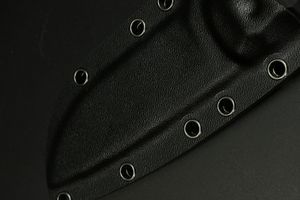
The last, but not least important point. Having a tool like a bushcraft knife (buy) on your belt provides a sense of control over the situation. In high-stress environments, the "feel of the steel" helps keep a cool head. If you’ve managed to choose a tool with a reliable sheath, it will always be at hand as a means of self-defense in the most extreme case.
Conclusion
72 hours is the timeframe when the resources of your body and your tool work at their limit. In these moments, it becomes obvious why professional gear is valued over mass-market products: you are choosing that extra margin of reliability built into a tool specifically for extreme loads.
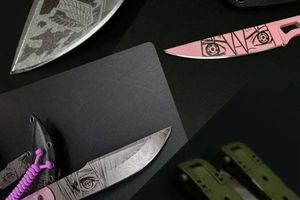
A reliable knife, built with an understanding of real field conditions, becomes your chance to successfully overcome a crisis where ordinary steel might fail. Having a meaningful inscription on the blade—whether it's home coordinates, an important date, or a phrase that gives you strength—turns the tool into a part of your personal story and your will to survive.
Choose your tool wisely. Your safety accepts no compromises.