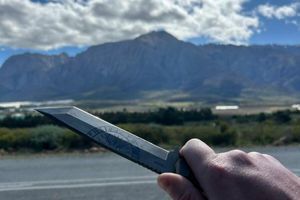
58–60 HRC: The Magic of Two Units, or Why "Harder" Isn't Always "Better"
Choosing a knife starts with design, but its lifespan in your hands is determined by the numbers in the product specs. Most often, you’ll see the range 58–60 HRC.
At the ProstaStal workshop, we know: within these two units lies the thin line between a reliable tool and a brittle disappointment. Let’s explore how the heat treatment of X12MF steel affects your work.
1. What is the Rockwell Scale (HRC) in Practice?
Low Hardness (< 55 HRC) The metal is too plastic. The knife dulls against the first dry branch, and the edge simply rolls over.
Extreme Hardness (> 62 HRC) The steel turns into "glass." It holds an edge incredibly well but becomes brittle and prone to snapping.
2. The "Over-Hardening" Trap
Why don't we harden above 60 HRC?
- Internal Stresses: Micro-cracks form inside the metal, making it liable to shatter if dropped.
- Loss of Toughness: The metal loses its ability to flex and spring back.
- Field Repairs: High-hardness steel requires expensive diamond tools to sharpen.
3. Why 58–60 HRC is the "Golden Ratio"?
For models like Sirko or Yarchuk, this is the point of maximum efficiency:
- Balance: Hard enough for heavy skinning, tough enough not to chip.
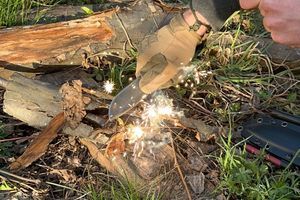
- Impact Resistance: Perfect for "batoning" and heavy-duty tasks.
- Quick Recovery: Restore razor sharpness in 30 seconds with a ceramic rod.
4. The Unit That Defines Specialization
| Hardness | Best Purpose | Character |
|---|---|---|
| 58 HRC | Heavy camp work, chopping. | Maximum durability. |
| 59 HRC | Universal hunting/touring. | Perfect balance. |
| 60 HRC | Tactical cutting, EDC. | Aggressive edge. |
Important: We offer a free hardness diagnostic for any ProstaStal product. Your confidence is our priority.