
The thunder of hooves, the clash of steel, and dust clouding the vision. In the chaos of a 19th-century cavalry charge, a second's delay could cost a life. A rider who lost his saber in the heat of battle became a defenseless target. It was then that a narrow strip of leather connecting the hilt to the rider's wrist became more than just a uniform detail—it became a guarantee of survival. This attribute was called a "temlyak" (lanyard) — a name derived from the Turkic "temlik," which literally meant a strap or a loop. Originally an element of Eastern riders' gear, it later became a mandatory standard of European military aesthetics. Today, it is experiencing a second birth in the pockets of urban travelers and knife enthusiasts.

Although the era of mounted battles has passed, the philosophy of "inseparability" between a person and their tool remains. Let’s explore why what a lanyard is goes beyond mere fashion; it is a legacy that makes your knife more perfect.
The Path to the Pocket: How Military Experience Became Daily Convenience
Historically, the cavalry lanyard (or portepee) had one critical task: if a soldier's hand opened due to fatigue or impact, the saber remained hanging from the wrist. Today, in the world of EDC (EveryDay Carry), the task has changed, but the roots remain the same.
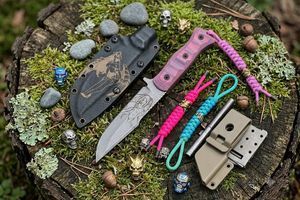
A modern knife lanyard is a way to "extend" the handle and make drawing the tool instantaneous. Imagine your knife sitting deep in a jeans pocket under a jacket. It’s hard to find the clip while wearing gloves, but grabbing a sturdy braided cord is a matter of a split second. This is the same "cavalry speed," adapted to the urban jungle.
Knots That Hold History: Paracord Instead of Leather
While lanyards were once made of raw leather, today's standard is nylon strength. A paracord lanyard has become a symbol of reliability. It is a material that doesn't rot, isn't afraid of sweat, and can withstand enormous loads.
The square paracord lanyard is particularly popular. Its rigid structure not only looks aesthetic but also creates additional volume that fits perfectly in the palm. When you work with a knife, this "tail" acts as a tactile anchor, allowing the pinky and ring fingers to gain extra support. This is exactly the kind of control hussars needed during complex maneuvers.
The Bead as a Mark of Distinction: Modern Heraldry
In the armies of the past, the lanyard served as a true "military passport." By a complex combination of colors on the tassel, the braid, and the "sliding loop," one could unmistakably determine the rider's regiment, squadron, and even company number. For the lower ranks, wool threads of various colors were used, while officer lanyards sparkled with gold or silver embroidery, emphasizing the owner's high status. This detail was so significant that being deprived of the right to wear an officer's lanyard was considered a shameful punishment.

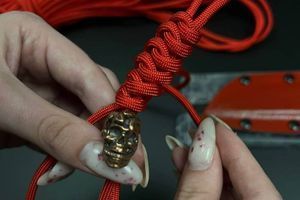
Today, this role of a visual marker is fulfilled by a lanyard bead. It is your personal "award," a symbol of belonging to a community of those who appreciate quality gear and understand the nuances of equipment.
-
Functional Accent: A massive lanyard bead shifts the cord's center of gravity, making it more "obedient." It acts as a lever, making it convenient to pull the knife from a sheath or pocket.
-
Individuality: Today, you can buy a lanyard bead made of titanium, bronze, or even silver, featuring images reminiscent of ancient warriors, mythical creatures, or sleek geometric shapes.
Using beads for paracord is the simplest way to customize a factory knife, turning it into a unique piece with its own history.


Conclusion: A Tool That Is Always With You
The cavalry lanyard has traveled from bloody battlefields to the pockets of stylish city dwellers. It reminds us that a knife is not just a cutting tool, but an extension of its owner's will. Whether you are climbing a mountain or simply opening a package in the office, this small accessory provides the same connection to history that saved the lives of riders centuries ago.
Visit the ProstaStal catalog to choose your lanyard and bead. Add a piece of legendary history to your EDC.
What story will your knife tell? Choose reliability proven by the ages.