
🔪 What Makes a Tactical Knife Different from a Regular One: A Complete Guide with Examples
In today’s world, there are countless types of knives: kitchen, camping, hunting, multitools, folding EDC, and tactical. But the tactical knife raises the most questions. Why does it cost more? What makes it better than a "regular" one? And when is it really worth choosing a tactical tool?
In this article, we’ll explain the difference between a regular and a tactical knife, provide a comparison, and showcase examples from the ProstaSTAL lineup.
📌 What do we mean by a “regular knife”?
Regular knives are tools for:
-
everyday household tasks (kitchen, cottage);
-
light camping and hiking;
-
fishing, basic outdoor use;
-
cutting rope, bread, vegetables, etc.
These knives are not designed for heavy loads, extreme conditions, or combat. Their main goal is simplicity and convenience.
🛡 What is a tactical knife?
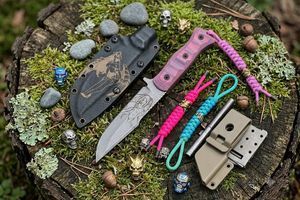
A tactical knife is a survival tool designed to operate in the harshest conditions:
-
rain and mud,
-
dust and frost,
-
stress or close contact situations.
It’s chosen by soldiers, territorial defense, rescuers, sappers, instructors, and extreme hikers. A tactical knife must become an extension of your hand — reliable when there’s no room for error.
🔍 Key Differences
1. ⚙️ Construction
Regular knife: often has a partial tang or folding structure that cannot withstand heavy loads.
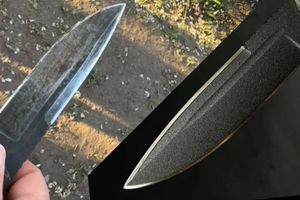
Tactical knife: always full-tang — the blade runs through the entire handle.
🔧 ProstaSTAL example:
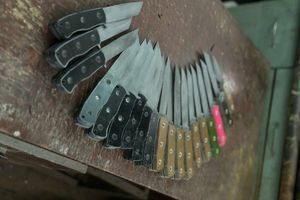
🔪 "Shchedryk" (tactical knife with full-tang construction)
✔ Field-tested. Withstands blows, stress, and wood chopping.


2. 🔩 Materials
Regular knife: low-end stainless steel (420, 30Cr13), plastic handle, sometimes wood.
Tactical knife: high-grade tool steels (Х12МФ, D2, N690), micarta or G10 handle, anti-corrosion coating, etching, stonewash.
🔧 ProstaSTAL examples:


3. 🔪 Blade Shape
Regular knife: designed for domestic tasks (straight or curved edge), not intended for piercing or tactical use.
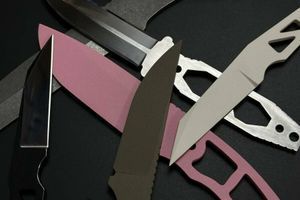
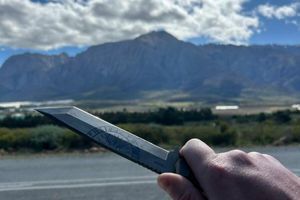
Tactical knife: blade shapes like tanto, dagger, drop-point — suitable for piercing, stabbing, precision cutting.
🔧 ProstaSTAL examples:


4. 🧷 Handle
Regular knife: comfortable but often slippery or not moisture-resistant.
Tactical knife: ergonomic, non-slip, with finger grooves. Easy to hold even with wet hands or gloves.
🔧 ProstaSTAL examples:


5. 🛡 Sheath and Mounts
Regular knife: soft pouch or no sheath at all.
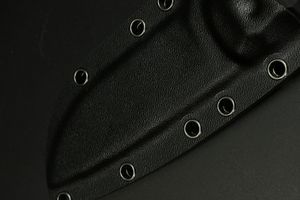
Tactical knife: hard sheath with secure retention, compatible with MOLLE, Tek-Lok, various carry options.
🔧 ProstaSTAL examples:


| Feature | Regular Knife | Tactical Knife |
|---|---|---|
| Purpose | Everyday, camping | Combat, rescue, survival |
| Construction | Partial/Folding | Full-Tang |
| Steel | Low-grade | Tool steels (Х12МФ, D2) |
| Handle | Plastic, wood | Micarta, G10 |
| Blade Shape | Straight, curved | Tanto, dagger, drop point |
| Sheath | Soft or none | Hard, MOLLE, Tek-Lok |
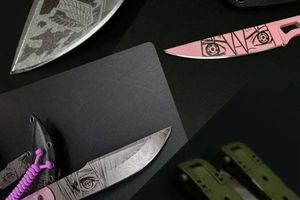
| Extras | None | Engraving, serration, paracord holes |
✅ Conclusion
A tactical knife is not a “stylish toy” — it’s a tool for critical moments.
It’s built to save, support, endure when everything else fails.
And if you need to:
-
protect yourself;
-
work in the field;
-
be ready for emergencies —
don’t choose “just a knife.” Choose tactical.
🔧 ProstaSTAL — we make knives not for looks, but for results.