
🔪 Types of combat knives: what they are, what they are for, how to sharpen
In the world of weapons, there are tools that do more than just serve - they save, protect, help to survive. One of these is a combat knife. It can be seen in the hands of a soldier on the front, a scout in the mountains or a tactical tourist making his way through the forest. But what exactly makes a knife combat? What are the types of combat knives, and how do they differ from each other?
In this article, we will not just list the types of combat knives, but also talk about their function, shape, history and why it matters.
1. Assault knife - a combat classic
Assault knives are the first "front-line" tools. They were created not for beauty, but for survival on the battlefield.
🧷 Features:
blade length - 15–20 cm;
thick butt for chopping and even digging;
often have a saw or serrator on the butt;
massive handle, which is subject to a pronounced hard load.
📌 For whom: infantrymen, military, sappers.
📌 When to try: during an assault, breakthrough, field conditions.
Example: the legendary M9 Bayonet, which American soldiers carried with the M16 rifle.

2. Tactical knife - a modern all-rounder
A tactical knife is a hybrid of a combat tool and a survival knife. It is designed to serve not only in the field, but also during patrols, evacuations or emergency situations.
🧷 Features:
10–18 cm blade, convenient for daily wear;
anti-corrosion coating (often black or gray, without shine);
handle made of G10, micarta or rubber;
often - open for a lanyard, MOLLE, Tek Lok mount.
📌 For whom: special forces, soldiers of the Armed Forces of Ukraine, tourists, police.
📌 When to use: combat missions, reconnaissance, camp life.
Example: KA-BAR USMC, "Yarchuk" from ProstaSTAL - a reliable Ukrainian knife for tactics and survival.

3. Dagger – a knife designed to stab
This is a close combat weapon. Its shape speaks for itself: narrow, sharpened on both sides, symmetrical. Designed for precise and deep impact on the target.
🧷 Features:
symmetrical blade, sharpened on both sides;
sharp tip for penetration;
minimal weight.
📌 For whom: reconnaissance, special forces, those who operate quietly.
📌 When to try: close combat, penetration, defense.
Example: Fairbairn–Sykes (British commando knife), “Sirko” – Ukrainian kizhdal with character.

4. Bayonet-knife – part of the weapon
This knife is not just worn on the belt – it is attached to the rifle. It is used as a melee weapon, as well as a tool.
🧷 Features:
has an attachment to the barrel of the weapon;
can have a saw, a can opener, a screwdriver;
performs the role of both a knife and a bayonet.
📌 For whom: shooters, mechanics, sappers.
📌 When to try: assault, clearing, field work.
Example: Soviet bayonet for AK-74, American M7.

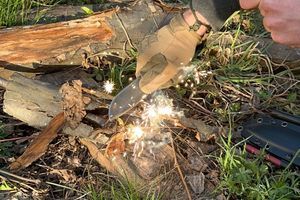
5. Survival knife - your chance in the wild
Sometimes a knife is the last chance. In the forest, mountains, under fire or alone with nature - a survival knife should be reliable, like a bulletproof vest.
🧷 Features:
thick blade, capable of chopping;
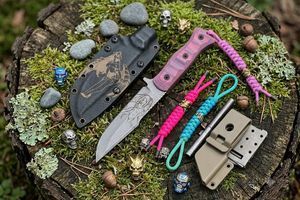
scabbard with flint, sharpener, paracord;
handle - with an anatomical grip, often with a compass or a surface for storing small items.
📌 For whom: military, rescuers, tourists, bushcraft.
📌 When to try: survival, camp, evacuation.
Example: Pilot Survival Knife, "Shchedryk" ProstaSTAL (tactical series).

6. Karambit - a predator knife
This knife came from Southeast Asia. It has a curved blade in the shape of a claw and a ring for fixing the finger. Extremely effective in close combat.
🧷 Features:
Sickle/claw blade;
Ring for the index or little finger;
Often used in martial arts.
📌 For whom: stormtroopers, instructors, airsoft, defenders.
📌 When to try: close combat, received protection.
Example: FOX Karambit, Emerson.

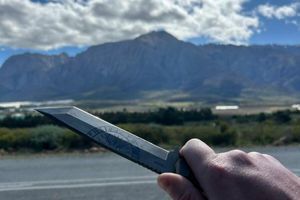
7. Tanto – Japanese power in a modern design
Tanto is not just a knife, it is a legend of the samurai era. Its tip has a characteristic “break”, which provides additional strength when piercing.
🧷 Features:
blade with a broken butt;
extremely strong tip;
often used to pierce armor.
📌 For whom: military, SSO fighters, lovers of oriental tactics.
📌 When to try: breakthrough, contact combat.
Example: Cold Steel Recon Tanto, “Tanto” ProstaSTAL.

8. Skeleton knife – minimalism that works
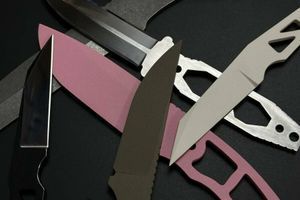
This is a knife without hand pads — light, compact, hidden. It is easy to attach to a vest, belt or in a bag.
🧷 Features:
all-metal construction;
minimal weight;
ideal for EDC (everyday carry).
📌 For whom: military, tactical medics, minimalist fans.
📌 When to try: as a spare knife, in the field.
Example: “Pulyuy”, “Sikorsky”, “Korolyov” — author's skeleton knives from ProstaSTAL.


9. Throwing knife – accuracy and silence
Designed for throwing. It has the perfect balance and shape that allows you to accurately hit the target at a short distance.
🧷 Features:
even weight distribution;
smooth shapes without hooks;
often does not have a handle or has it built into the body.
📌 For whom: reconnaissance, snipers, athletes.
📌 When to try: quiet experience, training, show.
10. Hidden knife – when seconds matter
These are small knives that are easy to hide: in a sleeve, behind a belt, in a sheath under a bulletproof vest. They are used in critical situations when a lightning-fast reaction is required.
🧷 Features:
short blade (5–9 cm);
fixed or folding;
convenient for quick extraction.
📌 For whom: security guards, intelligence, military.
📌 When to try: unexpected attack, close contact.
Conclusion: a knife is not just a tool
When choosing a combat knife, it is important to understand: there is no universal one. Each type of combat knife is designed for its own task, and sometimes for a specific situation.
Therefore, before buying, ask yourself: what do I need this knife for? And then choose - tactical, assault, survival or skeleton knife.
🛠 ProstaSTAL - Ukrainian knives created for real challenges.
Tested on the front, handmade, with a soul. We do not make knives "for the picture" - we create tools of action.